
Leave A Message
If you are interested in our products and want to know more details,please leave a message here,we will reply you as soon as we can.

In the specialized world of industrial chemistry, the synthesis of high-purity chelating agents is a cornerstone of modern manufacturing. At Bewellchem, we provide the high-quality Bewellchem raw materials necessary to drive these complex reactions. One of the most critical pathways in our portfolio is the transformation of Ethylenediamine (EDA) into Ethylenediaminetetraacetic acid (EDTA)—the world’s most versatile chelating agent.
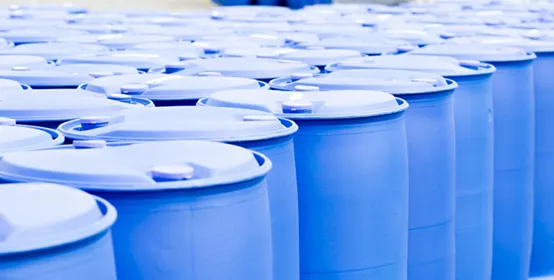
The journey begins with Ethylenediamine applications. As a primary amine, EDA serves as the essential building block for various nitrogen-containing compounds. Its unique structure, featuring two nitrogen atoms with lone pairs of electrons, makes it the perfect precursor for synthesizing ligands that can "clamp" onto metal ions.
In EDTA production, the most common industrial method is the Bersworth process (cyanomethylation). This involves the reaction of EDA with formaldehyde and sodium cyanide (or hydrogen cyanide) in an aqueous solution. The result is a molecule with four carboxylic acid groups and two tertiary amine groups, creating the hexadentate structure that defines EDTA’s power.
The primary function of EDA chelating agents is their ability to stabilize metal ions. Through a process known as metal ion chelation, the EDTA molecule wraps around a metal ion, forming a stable, water-soluble complex. This prevents the metal ions from reacting with other components in a system, which would otherwise lead to scaling, oxidation, or unwanted catalytic reactions.
One of the most significant sectors for these products is water treatment chemicals. In industrial boilers and cooling towers, mineral buildup is a constant threat to efficiency. EDTA produced from high-grade EDA effectively sequesters hardness ions, preventing scale formation and extending equipment lifespan.
Beyond water treatment, the applications are vast:
● Pulp and Paper: Preventing metal ions from decomposing bleaching agents.
● Agriculture: Creating chelated micronutrients for better plant absorption.
● Textiles: Eliminating trace metal interference during the dyeing process.
The efficiency of a chelating agent is directly proportional to the purity of its precursors. Impurities in EDA can lead to side reactions, reducing the final yield and the chelation value of the EDTA. As a trusted partner in the chemical trade, Bewellchem ensures that our Bewellchem raw materials meet the stringent technical specifications required for high-yield EDTA production.
Understanding Ethylenediamine applications is key to optimizing industrial processes across the globe. By leveraging EDA to create powerful EDA chelating agents, industries can solve complex challenges in water treatment chemicals and metal stabilization. At Bewellchem, we remain committed to supplying the chemical industry with the consistent, high-quality intermediates needed to keep the world’s manufacturing lines running smoothly.
Are you looking to optimize your production line with high-purity Ethylenediamine? Contact the Bewellchem team today for technical specifications and competitive sourcing options.


leave a message
Scan to wechat :

Scan to Whatsapp :


 IPv6 network supported