
Leave A Message
If you are interested in our products and want to know more details,please leave a message here,we will reply you as soon as we can.

In the world of industrial chemistry, the performance of a polymer is entirely dictated by its building blocks. For manufacturers looking to synthesize high-performance coatings, cured epoxies, and robust binders, ethylenediamine (EDA) serves as a critical backbone. But how exactly does this simple diamine transform into a powerhouse of industrial applications?
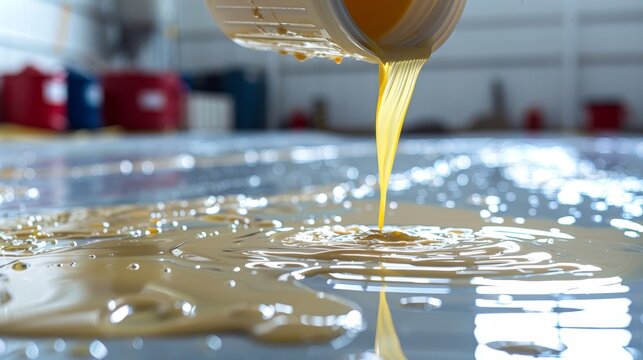
As a trusted industrial resin supplier, bewellchem delves into the chemistry behind EDA and its indispensable role in the formulation of polyamide resins.
At the heart of polyamide synthesis is the polyamine condensation reaction. EDA, a low molecular weight aliphatic diamine with two highly reactive primary amine groups, is reacted with dicarboxylic acids. Because EDA is short-chained and highly concentrated in functional groups, it reacts rapidly and efficiently.
During this polymerization process, the amine groups of the EDA react with the carboxyl groups of the acid, eliminating water as a byproduct and forming strong amide linkages (-NH-CO-). The choice of the acid partner determines the final property of the resin, leading us to one of the most common industrial formulations: the dimer acid reaction.
When EDA is reacted with dimerized fatty acids (dimer acids), it yields two distinct classes of EDA polyamide resins, depending on the ratio of the reactants:
By maintaining an excess of EDA in the formulation, the resulting polymers retain unreacted, free amine groups along their chains or at the termini. These reactive polyamides act as excellent curing agents (hardeners) for epoxy resins. They provide the final cured material with exceptional flexibility, high impact resistance, corrosion protection, and excellent adhesion to metal and concrete substrates—making them staples in heavy-duty marine and industrial coatings.
When EDA is reacted in a precise stoichiometric balance with dimer acids, non-reactive polyamides are formed. These resins are highly valued in the production of high-performance hot melt adhesives. Thanks to the compact structure of EDA, these adhesives exhibit sharp melting points, rapid setting times, superior thermal stability, and excellent adhesion to difficult substrates like plastics, leather, and metals.
The efficiency of your polyamine condensation reaction depends heavily on the purity and consistency of your chemical precursors. In the production of EDA polyamide resins, even minor impurities can cause unwanted side reactions, discoloration, or inconsistent viscosity in the final batch.
As a premier global industrial resin supplier, bewellchem ensures that our ethylenediamine (EDA) meets the highest industry standards for purity and moisture control. Whether you are formulating reactive polyamides for protective coatings or synthesizing high-tack hot melt adhesives via the dimer acid reaction, we provide the reliable raw materials you need to maintain a competitive edge.
EDA is far more than just a reactant; it is a foundational catalyst for innovation in the resin industry. By optimizing its reaction pathways, manufacturers can engineer materials that protect infrastructure, bond advanced composites, and drive industrial progress. Contact bewellchem today to secure high-quality chemical solutions for your next formulation.


leave a message
Scan to wechat :

Scan to Whatsapp :


 IPv6 network supported